
Have you ever wondered how a company recovers after a sudden setback? Commercial restoration is more than just cleaning up. It protects your investment and keeps your business running smoothly. When floods, fires, or mold damage hit, quick action is a must. Our team inspects all the damage, both the issues you can see and those hidden behind walls or under floors. We remove water, clear debris, and secure the building so your workspace stays safe. A smart restoration plan turns unexpected challenges into a strong base for future success.
Commercial Restoration Explained: Definition and Scope
Commercial restoration means getting a business back up and running after events like floods, fires, or mold outbreaks. When damage happens, our team quickly checks your property to see what needs fixing. We work fast with water extraction, cleaning, and securing the building with tarps or boards. Our crews are available day and night to offer the help you need. We fix both the obvious damage and any hidden issues so that your property is safe and protected.
This service starts with a careful look at the damage. Next, we contain the problem and fix it in stages. We handle emergency repairs, full rebuilding, and even help plan ahead to reduce future problems. Our work includes steps like removing water with air movers and dehumidifiers (machines that remove moisture), and repairing structures that were damaged. We also keep the project organized, following safety rules and local guidelines. For example, after water damage, our technicians remove all the water and dry the area completely to stop mold from forming. This clear method helps your building recover quickly and gets your business back to normal with as little downtime as possible.
Common Commercial Restoration Scenarios and Services

Commercial buildings can face a range of challenges that need fast, reliable work. When issues arise, we act quickly to protect your business and stop further damage. Below are some common problems and how we handle them:
-
Flooding from storms or burst pipes
We rapidly extract water using pumps and use dehumidifiers and air movers to dry the area. This quickly removes pooled water and helps prevent mold and structural problems. -
Fire and smoke damage
Our team removes soot and debris and cleans every affected area. This reduces health risks and gets the space ready for use again. -
Mold caused by high moisture
We start mold removal early to stop it from spreading. Our experts clean surfaces and treat the air (using mold remediation methods) to keep the space safe. -
Odor or biohazard contamination
We use specialized cleaning methods to get rid of stubborn smells and neutralize harmful substances. This ensures a healthy space for both employees and customers. -
Chemical spills and contamination
Our team safely cleans up spills from chemicals on carpets, furniture, and hard surfaces. We use careful decontamination steps to remove any traces of harmful substances. -
Contaminated air ducts
Cleaning the air ducts removes trapped dust and particles. This helps improve air quality and makes the facility safer for everyone.
Every problem is met with a focused approach using a mix of techniques. This strategy helps us fix issues quickly and lets your business resume with minimal downtime. Our goal is to restore your building while keeping everyone safe.
Commercial Restoration Process and Methodology
Commercial restoration is a set of steps that helps businesses get back on track quickly while keeping the property valuable. We follow trusted methods and modern techniques to reduce damage and build lasting strength.
We start with a full inspection. Our team uses moisture meters (tools that measure wetness) to find both visible and hidden problems. For example, we once found 6 inches of standing water in a key area, which guided our drying process.
Next, we act fast with emergency measures. We cover damaged areas with tarps, board up openings, and stop leaks to keep further damage from spreading. We also use remote monitoring to watch critical spots and prevent mold growth.
After that, we move into restoration and drying. We use advanced air movers and dehumidifiers (machines that remove moisture from the air) to extract water and dry affected spaces. By focusing on specific drying zones, we help the business resume operations sooner.
Finally, we finish with careful reconstruction. We repair, clean up contaminants, and add finishing touches to bring the property back to its pre-damage condition and support business continuity.
| Phase | Description |
|---|---|
| Assessment | We inspect the building using moisture meters and other tools to spot both visible and hidden damage. |
| Mitigation | We take immediate actions like tarping, boarding, and stopping leaks to contain damage and monitor key areas. |
| Restoration/Drying | We extract water and dry affected spaces using advanced air movers and dehumidifiers, focusing on targeted zones to reduce downtime. |
| Reconstruction | We repair, decontaminate, and finish touches to restore the property and help the business return to normal operations. |
what is commercial restoration: Boosting Business Value
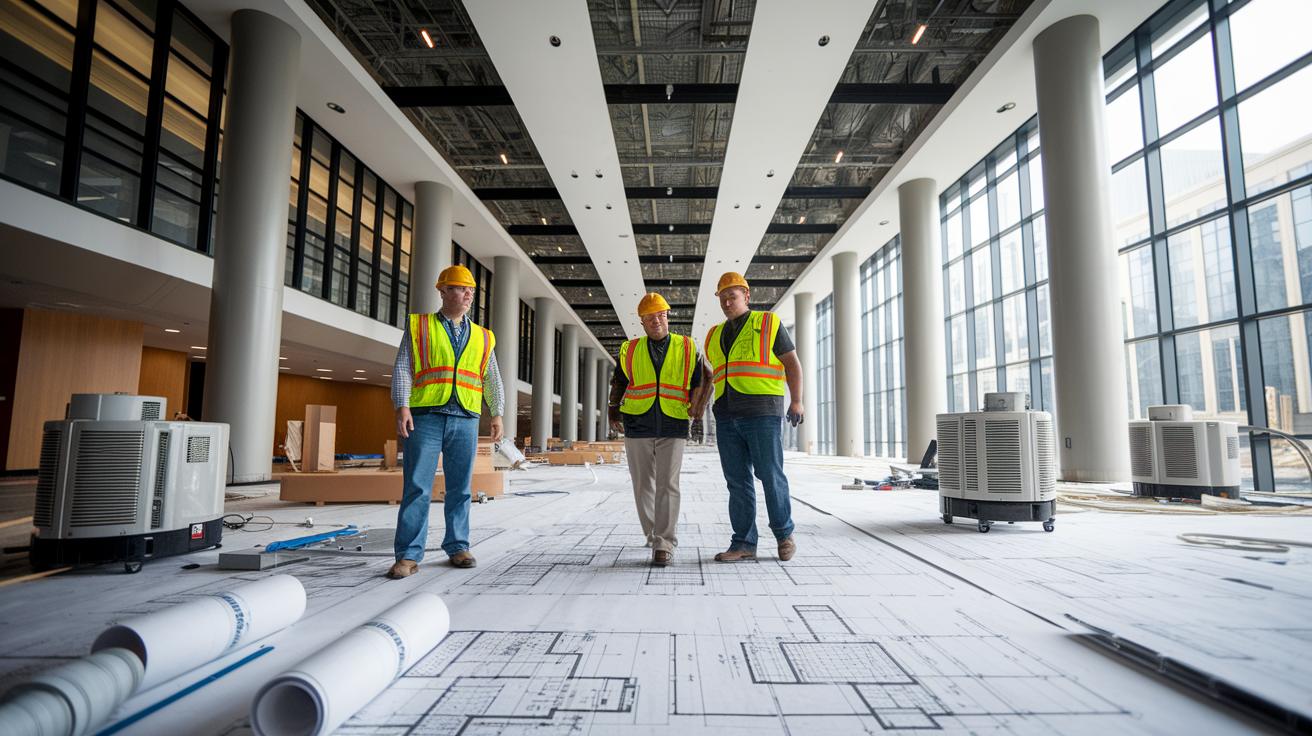
Commercial restoration is designed for large business properties that need quick and complex repairs after damage. These spaces cover more area, so inspections require detailed work and more specialized equipment.
Our teams move fast using extra air movers, dehumidifiers, and other advanced tools to dry out the space and repair damage. They follow strict safety rules and tight schedules because even a little downtime can affect a company’s operations and reputation.
Residential restoration, on the other hand, deals with single-family homes or small apartments. The work is usually simpler, with fewer rooms to fix and easier restoration of belongings. Inspections require less gear, and repair costs tend to be lower because the scale is smaller.
Both commercial and residential projects follow the same basic steps of water extraction, drying, and repairing the structure. However, commercial projects need extra speed and resources to meet safety standards and keep business disruptions to a minimum. For instance, fixing a business facility might involve round-the-clock work to quickly control and dry out the damage, while home repairs can be done in shorter sessions.
This focused approach ensures that business operations get back on track as soon as possible, boosting overall business value.
what is commercial restoration: Boosting Business Value
Commercial restoration plays a key role in helping businesses bounce back quickly after an interruption. For example, offices need fast water removal and drying to get workers back on the job, while retail shops rely on these services to save products and reopen safely.
Healthcare facilities require deep cleaning and disinfection (germ-kill processes) that meet strict standards to protect both patients and staff. Hotels and similar places depend on methods that keep guests safe and comfortable while emergency repairs take place. Warehouses and manufacturing plants face tougher challenges that require a solid repair plan to fix damage to production lines, storage systems, and equipment without halting operations.
Every business, from offices to factories, benefits from targeted restoration practices. One service may center on quickly extracting water, and another may focus on preserving merchandise. Providers design these responses based on each sector’s specific needs.
Overall, these services reduce downtime and swiftly restore safe, functional environments, which in turn boosts business value.
Certification, Compliance, and Safety in Commercial Restoration

We follow strict codes and guidelines to make sure every job meets safety and quality standards. Our work is based on IICRC guidelines (industry restoration standards) and OSHA regulations (rules to protect workers), along with state licenses and certifications. This careful process protects your property and keeps our team safe.
Our teams use advanced tools to assess and restore properties. We rely on moisture meters (tools that measure wetness), thermal cameras (devices that spot temperature differences), air scrubbers (machines that filter the air), and industrial dehumidifiers (devices that remove moisture). These tools help us identify and fix damage quickly and accurately.
Safety is a key part of our work. We use proper PPE (personal protective equipment) to keep our crew safe and perform job safety checks as soon as we arrive. We run quality assurance tests throughout our process, from the first look to the final cleanup. Our emergency response plans give clear instructions to keep everyone secure.
For example, picture a technician using a moisture meter to make sure a hidden wall area is dry before starting any repairs. This step-by-step approach shows our strong commitment to compliance, safety, and top-quality restoration work.
How to Choose Commercial Restoration Companies
When your business needs repair after damage, start by checking the company's experience. Look for a firm that has handled similar problems before and holds proper certifications and licenses (proof that they meet industry standards).
Check if they offer help around the clock. A firm that is available 24/7 can respond quickly to emergencies, which helps reduce downtime and further losses. Ask if they provide clear cost estimates and set turnaround times so you can plan your budget.
Next, take a look at their equipment. Modern tools like moisture detectors (devices that check for water) and industrial dehumidifiers (machines that remove excess moisture) show they are committed to doing quality work.
Finally, make sure they support insurance claims. A partner who works with your insurer can simplify the process by helping document damage and speeding up claims. Positive customer reviews can also give you confidence in their project management.
- Proven industry experience
- 24/7 rapid-response capability
- Modern equipment and technology
- Clear cost estimates and turnaround guarantees
- Insurance claims support and good customer reviews
Choose a provider that meets your business needs and helps minimize downtime. For a list of trusted providers, visit commercial restoration companies (https://mindtangle.net?p=110).
Business Benefits of Commercial Restoration

Commercial restoration helps businesses get back on track fast by using proven techniques. One regional office saw a 20% reduction in downtime when we extracted water and dried the area right after a flood. Did you know? A local diner reopened in just 48 hours after a quick response and avoided a 15% revenue loss in the next quarter.
We focus on fast water removal, mold prevention (mold is a type of fungus that can grow in wet areas), and efficient cleanup. These steps protect your property and make insurance claims quicker, which helps cash flow. In one industrial park, careful mitigation (limiting further damage) led to a smoother recovery and stronger confidence in long-term business operations.
| Case Study | Outcome |
|---|---|
| Regional Office | 20% downtime reduction |
| Local Diner | 48-hour operational resume, 15% revenue protection |
Final Words
In the action, the blog takes you through every step from damage assessment to full structural repair. It shows how rapid-response teams use water extraction, mold remediation, and precise restoration planning to stabilize your property. The outlined process answers the key question: what is commercial restoration? It’s a complete, hands-on approach to returning a damaged structure to safe, functional use. With clear strategies and real-world examples, every step works to limit further damage and rebuild confidence for a secure, bright future.
FAQ
Q: What is commercial restoration and what do its companies do?
A: Commercial restoration refers to repairing and rebuilding business properties after damage like floods, fires, or mold. Restoration companies handle every step—from initial damage assessment to water extraction and rebuilding.
Q: Where are commercial restoration company locations?
A: Commercial restoration companies are spread across the nation. Many have offices in urban centers and multiple branches to provide fast, 24/7 emergency response for damaged business properties.
Q: What does commercial reconstruction involve?
A: Commercial reconstruction involves rebuilding damaged structures from the ground up. This includes structural repairs, remodeling, and system replacements that help a business property resume normal operations.
Q: What distinguishes the largest and national restoration companies?
A: The largest national restoration companies operate across many states, offering round-the-clock emergency services, advanced equipment, and extensive expertise to quickly and safely restore business properties.
Q: What is ATS Restoration?
A: ATS Restoration is a recognized restoration service provider known for fast, reliable recovery work for commercial properties. They adhere to industry standards and deliver comprehensive damage repair and rebuilding services.
Q: What is the difference between repair and restoration?
A: Repair focuses on fixing individual issues, while restoration covers complete recovery after significant damage, including cleaning, drying, and rebuilding to return a property to its original condition.
Q: How do restoration companies get paid?
A: Restoration companies typically receive payment through insurance claims and contractual agreements with clients. They provide detailed estimates and work with insurers to secure prompt, fair compensation for their services.
Q: What are examples of restoration services?
A: Examples of restoration include water extraction, fire and smoke cleanup, mold remediation, odor removal, and structural repairs. Each service is designed to ensure a damaged business property is fully functional again.
Q: What does restoration mean in a job context?
A: In a job setting, restoration means the systematic process of repairing and rebuilding a damaged property. It involves assessment, mitigation, and reconstruction steps to return a building to safe, working order.