
Ever looked at a flooded home and wondered if it can really be fixed? Flood clean-up teams can remove the worst damage and get your home safe again quickly. It's like wiping a dirty window clean so you can see clearly. In this article, we explain how expert crews with strong equipment handle hidden messes that simple cleanup might miss. Keep reading to see how these services work and why they're a game-changer for restoring your property.
Comprehensive Flood Mud Out Services: Immediate Professional Cleanup & Cost Estimates
When floods cause heavy damage, sometimes all the mud and water must be removed down to the very structure. Volunteer teams often handle this work with basic tools, taking out damaged drywall, insulation, and flooring. Their efforts can save you money, but they usually do not handle every step, full demolition, thorough drying, and complete restoration are best done by professionals.
Our professional cleanup teams come fully equipped to handle dangerous flood water. They use big pumps, heavy-duty tools, and safe-on-site disposal methods to deal with messy water that may include sewage, manure, or chemicals. They wear proper protective gear to keep everyone safe while stopping mold growth and protecting your home’s structure.
To estimate the cost for full flood cleanup, we consider the size of the damaged area, how dirty the water is, disposal fees, equipment rental, and labor hours. Our disaster cleanup services use advanced methods to remove both water and muddy layers quickly and safely.
Key cost factors include:
- Affected area measurements
- Level of contamination
- Amount of demolition debris
- Equipment usage hours
Volunteer teams play an important role during high-demand times. They help immediately by removing unsafe materials to limit further damage. However, professional crews are needed later to dry everything properly and restore your home completely. Combining volunteer efforts with professional services can offer quick relief and reduce overall costs.
Storm Water Extraction & Mud Debris Removal Techniques in Flood Mud Out Services
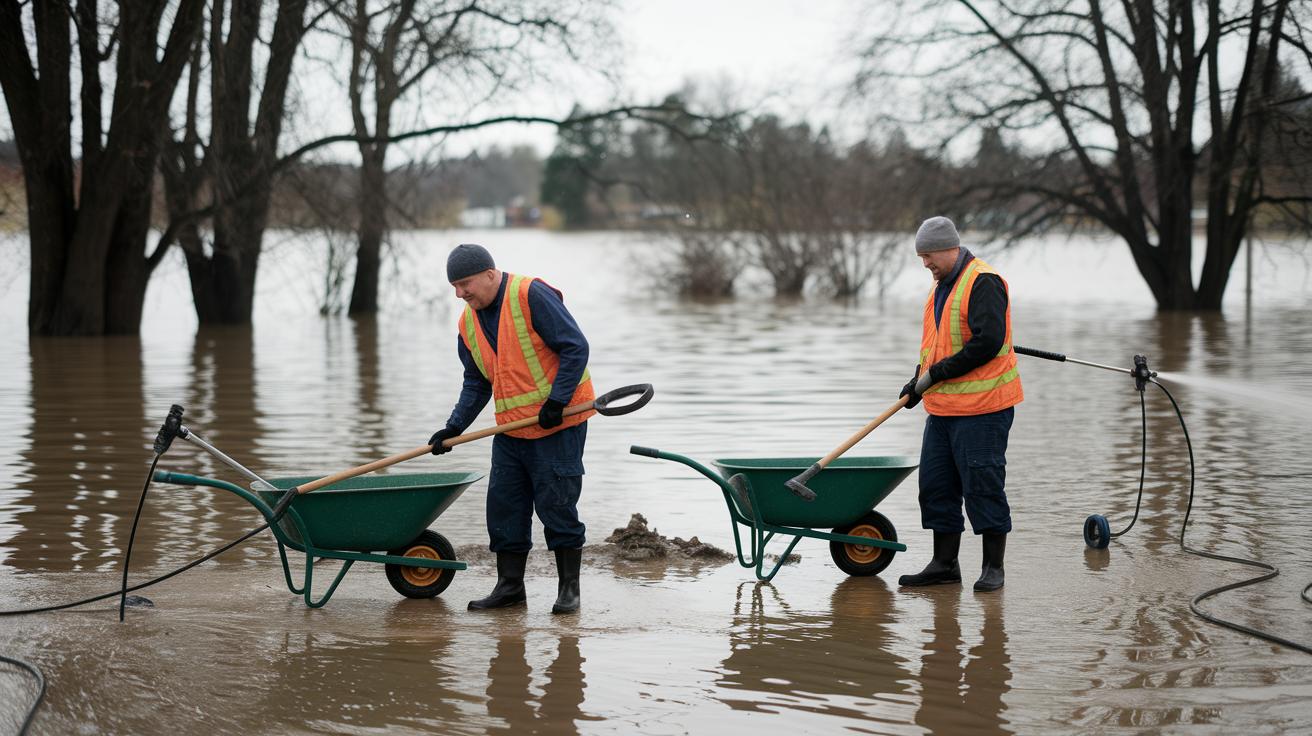
When we start cleaning up after a flood, we begin with basic, effective tools. Our team uses shovels, wheelbarrows, and pressure washers to break up thick, sticky mud. For example, one technician explained, "I use a pressure washer to break apart dense mud, which helps reveal any hidden contaminated layers." Once the bulk mud is loosened, we shift our focus to the hazardous flood water.
For contaminated water, we rely on heavy-duty equipment to remove it quickly. We use submersible pumps (pumps designed to work underwater) and high-volume wet-dry vacuums (machines that suck up both wet and dry materials) to extract standing water. These methods clear the area fast and help prevent further damage to your structures.
After the water is gone, we safely move the wet debris. We use industrial-grade debris chutes and specially designed containers to transport soggy materials like drywall, insulation, and softwood flooring. All the materials, including the water and debris, are treated as potentially hazardous. They are either tested or handled following strict local biohazard disposal rules to keep everyone safe. One team member noted, "Seeing a submersible pump in action is like watching safety at work, clearing danger swiftly."
Here are the main tools and steps we use:
- Basic tools: shovels, wheelbarrows, and pressure washers.
- Water extraction equipment: submersible pumps and wet-dry vacuums.
- Safe transport: industrial-grade debris chutes and secure containers.
Every tool and method we choose is meant to speed up the cleanup while keeping safety first throughout the process.
Damage Assessment & Site Evaluation for Flood Mud Out Services
We start each flood mud out job with a complete site safety check. Our crew looks for electrical hazards, weak structures, and gas leaks that could put you at risk. One of our technicians explains that he inspects every part of the property to find hidden dangers before work begins.
We use infrared cameras and hygrometers (tools that measure humidity) to check walls, floors, and subfloors for moisture. This process uncovers spots where water is hidden and could later cause mold if not taken care of fast. Our detailed checklist helps us note visible mold, damp areas behind baseboards, and signs that key support beams may be weakened.
After our inspection, we put together a clear report. This report outlines what needs to be removed, which equipment we will use, and the order in which we will clean up. By planning this way, we target the most at-risk areas and work to keep your home safe.
Key steps include:
- Conducting a site safety survey
- Performing moisture mapping
- Using a detailed inspection checklist
These careful steps build a clear plan for effective post-flood cleanup and safe restoration.
Structural Drying & Mold Prevention Strategies After Flood Mud Out Services

After we finish cleaning out the flood mud, our team sets up drying equipment right away. We use air movers, dehumidifiers, and desiccant dryers (machines that soak up moisture) together to lower the building's humidity below 40%. One technician mentioned that lowering humidity quickly gives the building a chance to recover. This fast drying step stops mold from getting the damp conditions it needs to grow.
Then we remove all wet drywall, insulation, and other materials that can hold moisture. These items can trap water and create a perfect spot for mold to thrive. By taking them out, we prevent lingering dampness from causing further problems. A worker noted that stripping back to the clean studs might seem drastic, but it is an important way to stop mold before it starts.
Next, we apply antimicrobial coatings that are approved by the EPA on studs, joists, and concrete slabs. These treatments form a barrier against mold spores and other contaminants. They protect the structure and help prepare it for rebuilding.
We also keep an eye on moisture continuously. Our team checks every treated area closely to prevent any additional damage. People with breathing issues, such as asthma or COPD, should avoid these areas until tests confirm the space is safe.
Key steps we take:
- Set up air movers, dehumidifiers, and desiccant dryers.
- Remove wet and moisture-absorbing materials.
- Apply antimicrobial coatings to protect surfaces.
Cost Factors & Insurance Cleanup Procedures for Flood Mud Out Services
Flood mud out service prices are driven by many factors. The main cost factors are the size of the affected area, how contaminated the floodwater is, the amount of demolition needed, the volume of debris that must be removed, and the hours required for drying equipment. For instance, if a large space needs heavy cleaning and demolition, the job will cost more because extra labor and equipment are needed.
Using volunteer teams might save you thousands in labor costs. But sometimes their work does not meet your insurance company's standards for a full cleanup. Insurance companies need clear evidence of the damage to approve your claim. They want detailed photos, a full list of the repair work, and contractor estimates. These records show the cleanup was done professionally and help support your claim.
Clear invoicing using standard methods can help avoid delays in the claim process. Invoices prepared with trusted tools like Xactimate (or similar systems) can smooth out the claims process. Detailed records not only help with insurance cleanup procedures but also guide the overall cost evaluation for restoration.
Local Availability & Rapid Response Coordination for Flood Mud Out Services

When flood damage hits, every minute is crucial. Volunteer teams sign up through local community groups or churches and complete simple liability forms before they begin. Their fast action removes dangerous mud and debris, which helps set up the next phase of repairs. On the other hand, professional teams offer 24/7 hotline support and typically arrive within four hours. One technician explained, "A quick response reduces further damage and starts the recovery process right away."
Both volunteer and professional groups work together with insurance adjusters, local contractors, and waste haulers to ensure that mud and debris are disposed of according to local rules. They focus first on vulnerable spots and high-risk areas like basements and daycare centers so that those most in need get help without delay.
Key steps include:
- Registering with community groups and signing liability forms.
- Calling professional services via a 24/7 hotline.
- Coordinating with insurance adjusters and local contractors for proper debris removal and safe hand-offs.
This team effort makes post-flood cleaning more efficient and helps homeowners get the support they need quickly.
Final Words
In the action, this article breaks the process down: from prompt water extraction and mud debris removal, through careful site evaluation and damage assessment, to proper drying, mold prevention, and cost documentation. Quick response and insurance coordination work together to secure a safe, stable home. Flood mud out services play a key role in restoring your property swiftly and safely. The approach builds a strong foundation for a full recovery, keeping your home and family safe throughout each step.
FAQ
Frequently Asked Questions
Q: What are flood mud out services near me?
A: Flood mud out services near you involve teams that remove floodwater, mud, and debris from properties using high-capacity pumps and manual tools. They restore your space safely with proper safety protocols.
Q: Are free flood mud out services available?
A: Free flood mud out services are sometimes offered by volunteer groups. These services help with basic cleanup but may not include full demolition, drying, or restoration needed for complete recovery.
Q: What do flood mud out service reviews reveal about the best providers?
A: Flood mud out service reviews show that the best providers respond quickly, use effective extraction techniques, and adhere to strict safety protocols. Customer feedback can guide you in selecting a reliable contractor.
Q: How can I clean up a flooded floor and get rid of mud after a flood?
A: Cleaning a flooded floor means extracting standing water first, then removing heavy mud with shovels and pressure washers, followed by thorough drying to stop mold from forming and further damage.
Q: What do disaster cleanup services for natural disasters involve?
A: Disaster cleanup services for natural disasters focus on removing contaminated water, mud, and debris. They conduct damage assessments, follow safety regulations, and restore structures using specialized equipment and trained personnel.
Q: What does ServPro actually do?
A: ServPro specializes in water extraction, structural drying, and restoration. They manage flood cleanup by removing water, treating mold, and rebuilding damaged areas with a comprehensive and safety-focused approach.
Q: How much does it cost to clean up a flooded basement?
A: The cost to clean up a flooded basement hinges on factors such as affected square footage, contamination level, equipment rental, and labor hours. A detailed estimate from a licensed contractor is essential for accurate pricing.
Q: How quickly does mold grow after a flood?
A: Mold can begin growing within 24 to 48 hours after a flood if moisture remains unchecked. Fast water extraction and drying are critical to prevent mold formation and additional property damage.