
Ever wonder how a commercial building bounces back from major damage? Restoration is more than just fixing up a building. It is a careful process that stops further harm, checks for hidden damage, and renews the space for safe use.
In this guide, we break down each step. First, we secure the site and check the extent of the damage. Next, we remove water and take steps to rebuild key areas. Each phase works together to reduce downtime and restore a secure, functional space.
This clear roadmap shows you simple, direct steps to bring a damaged property back to life.
A Complete Commercial Restoration Workflow Roadmap
We begin with stabilization. In this phase, we secure entry points, shut off water supplies, and isolate the areas that have been affected. These quick steps stop further damage and protect business operations. Water incidents are often under control in a few days, but challenges from fire, smoke, or mold might take several weeks to handle.
Next, we perform an assessment. Our team examines both visible and hidden damage. We check for water seepage under flooring, cracks in the structure, and smoke residue in the air ducts. We also use thermal cameras to find moisture that might lead to mold growth. This thorough survey lays the groundwork for the restoration plan and helps us estimate costs.
After that, we move to mitigation. We remove water using pumps and powerful vacuums, then dry the building with industrial dehumidifiers and fans. We also use air scrubbers and dry mist systems to treat contaminated areas. This step stops more damage and lets us work in stages so that parts of the business can keep running.
Once mitigation is done, repairs and restoration begin. Our construction team rebuilds framing, installs drywall, replaces flooring, and fixes roofs. We use selective demolition and careful cleaning to reduce downtime during this stage.
The last step is verification. Technicians check moisture levels, the strength of the structure, and the quality of the air. They record each checkpoint to make sure the building meets safety and performance standards before anyone moves back in.
- Stabilization
- Assessment
- Mitigation
- Repairs and restoration
- Final verification
Each step is carefully planned to restore properties quickly and safely with as little disruption as possible.
Initial Site Survey and Damage Assessment Steps

We begin by surveying the site for both obvious and hidden issues. Our team checks for things like water seeping under floors, cracks in the structure, and smoke residue in ductwork. For example, if a technician finds a thin film of water behind a wall, we take a closer look to see if moisture is hidden there.
We use a thermal camera to spot moisture behind walls and under surfaces that could lead to mold. If the camera shows a cool spot in an area that should be warm, it tells us there might be trapped water. This tool helps us see temperature differences that highlight water pockets you wouldn’t normally notice.
We also inspect the building’s structure to make sure beams, supports, and load-bearing parts are in good shape. At the same time, we check for hazards like asbestos and lead (materials that can be harmful to health). If we find a risk, we put protective measures in place right away.
Finally, we create a detailed report that gathers all the data from the survey. This report helps us plan the repairs and track progress as we restore the property.
Planning, Permitting, and Compliance in Commercial Restoration
We turn our detailed damage reports into a clear work plan. First, we list every permit needed before starting the job. Whether it's for demolition, electrical work, plumbing, or roofing, we know what's required. Usually, getting a permit takes 2 to 4 weeks. Even small renovation projects can need several permits, so planning upfront is key.
Then, we review all the rules to make sure the work meets federal, state, and local building codes. Our code check covers every repair, from fixing structural issues to cleaning HVAC systems (air conditioning and heating systems), so safety standards are met. We carefully note every detail and needed fix to make sure nothing is missed.
Next, we team up with insurance adjusters to set a detailed work plan. This clear approach helps everyone understand the schedule and progress. Our report shows timelines, permit updates, and compliance checks to help move the approval process along smoothly.
Following these steps lays a strong legal and safety foundation for the project. It moves the work along efficiently while keeping everything in line with required standards.
Mitigation and Interim Controls for Commercial Restoration
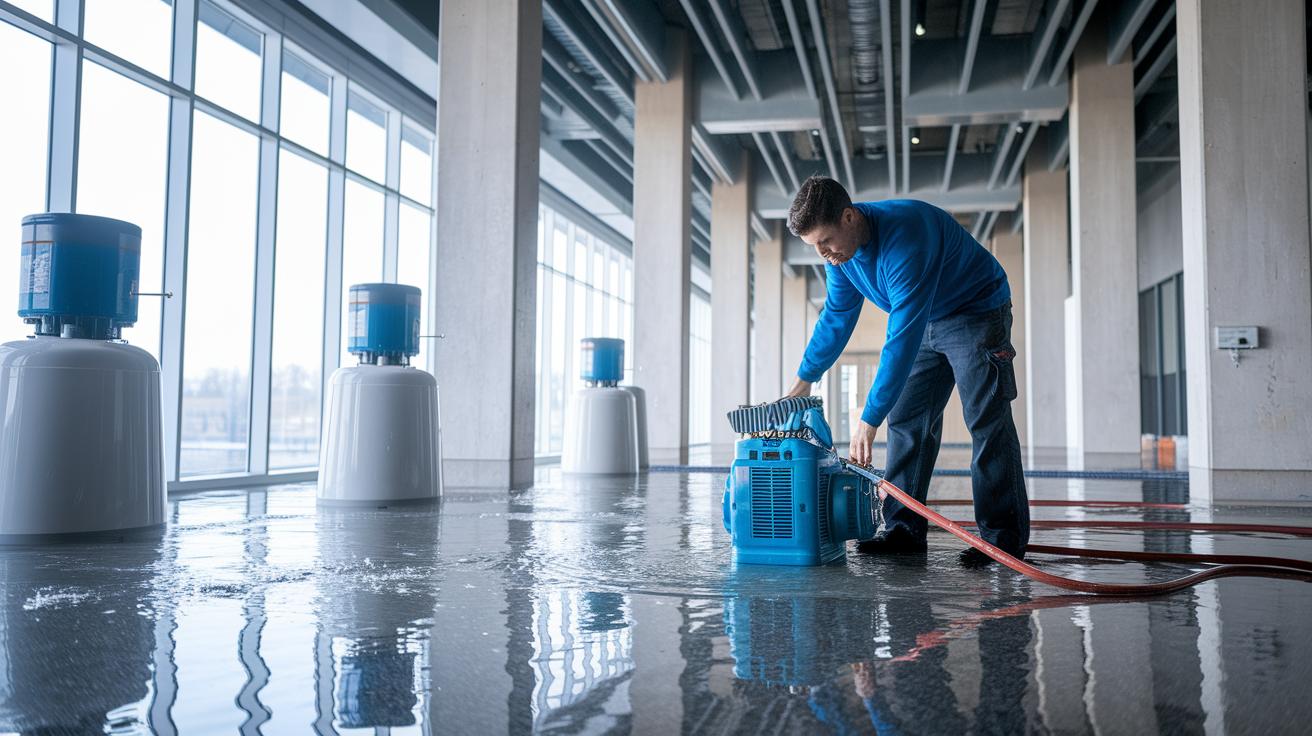
We begin by removing standing water. Our team uses submersible pumps and truck-mounted vacuums. For instance, if we find 6 inches of water in a lobby, our pump quickly gets rid of it, much like using a strong straw to clear a spill.
Once most of the water is out, we dry the structure with powerful dehumidifiers and drying systems. Think of it like wringing out a sponge: first, you extract the water, then you dry everything out completely to stop mold from growing.
At the same time, we manage mold and other contaminants. We use HEPA air scrubbers (devices that trap tiny particles that can cause mold), negative-pressure containment (which isolates the affected areas), and dry-fog applications to reach tight spots. For example, in a narrow corridor, negative-pressure containment stops spores from spreading while dry-fog treatment cleans hidden surfaces.
Our technicians then carefully remove any debris. This process clears out contaminated materials safely and stops cross-contamination, making sure your site is ready for reconstruction without delay.
| Process | Key Tool/Technique |
|---|---|
| Water Removal | Submersible pumps, truck-mounted vacuums |
| Drying | Dehumidifiers, structural drying systems |
| Mold Control | HEPA air scrubbers, negative-pressure containment, dry-fog |
| Debris Cleanup | Safe debris extraction methods |
Reconstruction and Restoration Execution Techniques
We bring all repair tasks together into one smooth process. We fix frames, hang drywall, and put in new floors while working carefully in spaces that are still in use. For fire and smoke damage, we remove only the damaged parts and then clean the air with HVAC cleaning and high efficiency air filters (HEPA filters) to clear out bad smells. When mold is present, we use safe containment and a fine mist (dry-fog) to protect the rest of your belongings.
We also add historical preservation and custom design touches when needed so original details stay intact during repairs in occupied areas.
- Fix frames, hang drywall, replace floors, and mend roofs with little disruption.
- Remove only the damaged materials from fire or smoke issues.
- Clean the air and remove smells with HVAC cleaning and high efficiency air filters (HEPA filters).
- Stop mold from spreading using safe containment and a fine mist (dry-fog).
- Preserve historical details and carefully work in occupied spaces.
Quality Assurance Checkpoints and Final Verification

Every stage of restoration is tracked with milestones that record moisture levels, building stability, and air quality. For example, if our team discovers a 12% moisture level behind a wall, we immediately schedule more drying and note the change. Digital records track progress, test results, and any adjustments made, ensuring complete transparency. A checklist confirms that every checkpoint meets our safety standards before we move on. Final inspections include tests to ensure no odors remain and that each area is safe for use. Regular quality checks are an essential part of the process, with the final verification serving as the last step to confirm both safety and proper performance.
Insurance Coordination and Project Close-Out in Commercial Restoration
We gather clear damage photos, work reports, and notes from adjusters to help get your claim approved. We make sure every document is ready so that your paperwork is complete and timelines are met. For example, a technician might record a 6-inch waterline breach and take photos to back up the claim. We also keep records that explain every step of the work, which answers questions like "How long do insurance claims take" (see more details here).
Our team then does a final check using set guidelines. We write a closing report that includes moisture tests, structure reviews, and air quality checks. This report is important for the final site handover. We also offer helpful tips for future care, like regular roof and drainage inspections, leak checks, and moisture monitoring.
Next, we review warranty details with you and include your feedback in our after-action meeting. This process includes scheduling follow-up visits and planning additional services to keep your property safe.
- Compile documentation to support claim approvals.
- Do final inspections and write closing reports.
- Handover the site with clear maintenance instructions.
We use your feedback to improve our process with each project close-out.
Final Words
In the action, we broke down each phase, from stabilization and assessment to mitigation, repairs, and final verification. We mapped how professionals plan, permit, and execute restoration while keeping downtime low through careful scheduling and insurance coordination.
This overview shows the value of following commercial restoration process steps to safely and efficiently restore a property. With clear checkpoints and documentation in place, the path to recovery stays direct and reassuring.
FAQ
What are the stages or steps of restoration?
The restoration process follows five phases: stabilization, assessment, mitigation, repairs and restoration, and final verification. Each phase builds on the previous to secure the property and prepare it for reoccupancy.
How long does it take to do renovations in a 3,000 sq ft commercial building?
Renovation timelines depend on the incident. Water-related jobs may take a few days, while fire, smoke, or mold projects can extend into several weeks. Scope, permits, and project details drive the overall schedule.
What’s the difference between remediation and restoration?
Remediation addresses immediate cleanup and damage control, such as water extraction or mold containment, while restoration repairs and rebuilds the property to its pre-incident condition.