
Have you checked if your home is truly safe after a mold cleanup? Even when stains are gone, hidden mold can still be lurking around.
Our team goes beyond a quick look. We check each room carefully, measure moisture with precise tools, and test the air quality to be sure all mold has been removed.
This method helps us confirm your home is clear of hidden mold. We want you to feel at ease and safe in your space.
Step-by-Step Mold Clearance Testing Process
After cleanup, our technicians perform a careful visual inspection while taking environmental readings. They check for signs of water damage, such as damp patches on walls or ceilings, and measure moisture levels. For example, a technician might find dark stains near a window sill with a 65% humidity reading. This step confirms that the mold source has been taken care of.
Next, proper sampling procedures are put into practice. Technicians collect air samples using calibrated devices (set at 15 liters per minute) and take surface swabs from 5 to 10 areas that show signs of staining or emit odors. They might record, "Air sample near the HVAC matched outdoor baseline levels," ensuring that indoor air quality is properly screened.
After collecting samples, all details are carefully documented. Temperature, humidity, and moisture mapping readings are recorded to show that the building is back to safe levels. Technicians also compare surface swabs from various zones to check for hidden mold growth. For instance, a swab from the baseboard may show no mold, which supports the visual inspection findings.
Finally, samples are sent to certified laboratories that follow recognized protocols and ASTM guidelines. The lab measures spore counts and compares indoor results with outdoor baselines. When the counts fall within normal ranges, a Post-Remediation Verification (PRV) report is created following IICRC S520 guidelines. This report provides documented proof that the mold clearance testing process has successfully restored a safe indoor environment.
Sampling Protocols and Environmental Evaluation for Mold Clearance
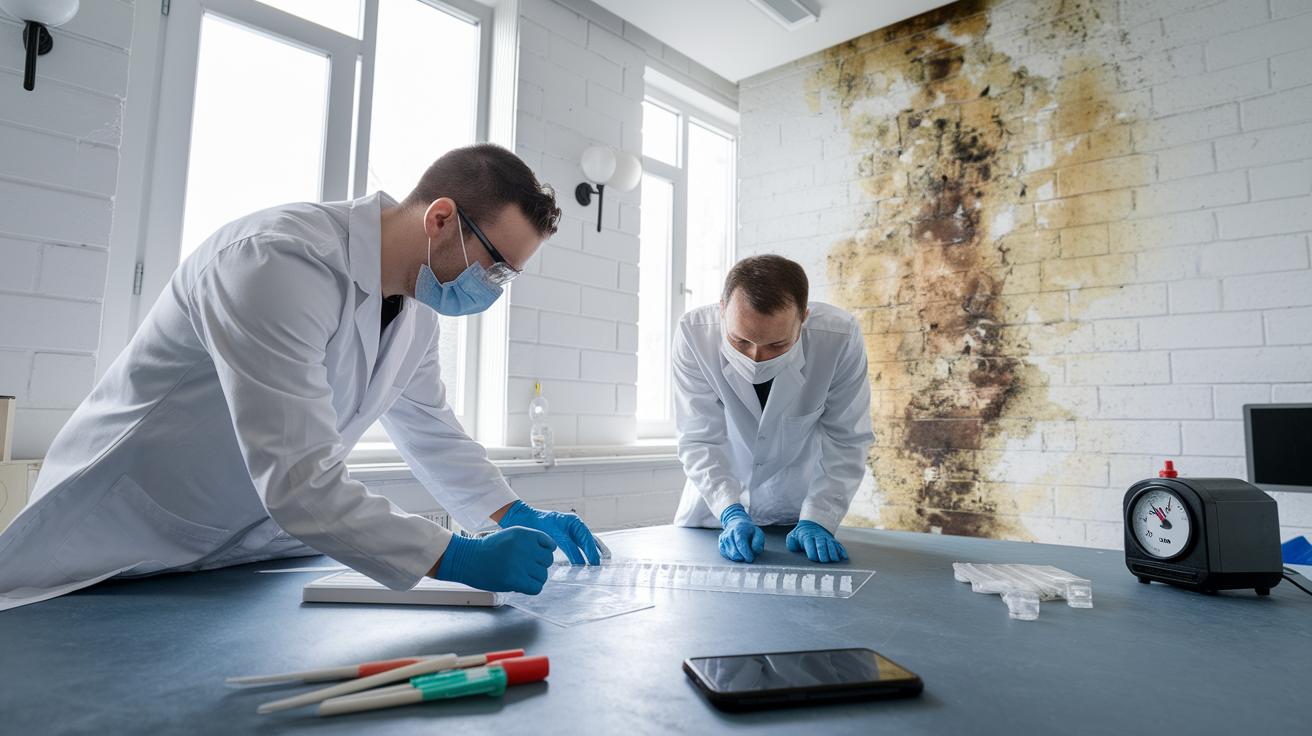
Technicians create a detailed sampling plan that combines air collection with an evaluation of the indoor environment. They collect between 3 to 5 air samples from inside the building and compare these with an outdoor baseline to check for higher mold spore levels. They use spore traps set to 15 L/min with mold remediation equipment (tools designed to remove mold) to ensure accurate readings.
They also take surface swabs from 5 to 10 areas that show signs of mold, such as discoloration near the ceiling or stains by a window. Moisture readings are recorded when the humidity rises above 60%, which helps confirm the presence of mold.
In addition, technicians inspect the building envelope to identify points where moisture may be entering. They document water damage and areas where mold is growing. For example, a technician might note that moisture seeped through a window frame and caused a damp patch behind the baseboard. By combining these steps with sample analysis, they build a clear picture of the indoor conditions to support safe mold clearance decisions.
Laboratory Analysis and Spore Quantification Methods in Clearance Testing
When samples are collected, the lab work starts right away. Our technicians use spore traps to catch tiny mold particles by drawing air at a steady rate. This method helps capture airborne fungi clearly. At the same time, we use culture plate analysis (where samples are grown to see if any colonies form) to count live mold. We follow the ASTM D7391 standard (guidelines for measuring airborne spores) and report the numbers as spores per cubic meter. A successful cleanup shows that indoor spore counts are the same or lower than those outdoors.
Our certified procedures also require us to tell apart common types of mold. We identify Cladosporium and a mix of Aspergillus and Penicillium by using microscopes and culture observations. These different tests help us decide whether the mold is harmless or needs more work. We also compare the lab findings with room conditions like temperature and humidity. For example, if humidity stays above 60%, we review the spore count carefully. We perform statistical checks to ensure the numbers are consistent, typically keeping variations within a 95% confidence range.
This careful process gives you clear and reliable results. Every report shows spore counts, lists the mold species found, and includes the data checks we perform. Homeowners and facility managers alike can trust these results to know that safety standards are met. For more details on how to collect samples, you can check guides that explain how to test for mold. These lab protocols provide the documented proof that the mold clearance process has made your indoor space safe again.
Acceptance Criteria and Post-Remediation Verification Standards

We follow IICRC S520 and EPA guidelines to confirm that all remediation work is complete. First, we check that there is no visible mold, that humidity stays below 60%, and that spore counts match what you would see outdoors. Our technicians also make sure that systems like the HVAC are working well and filtering the air properly. For example, a technician might record a humidity reading of 55% to show that moisture levels are safe.
We use both numbers and visual checks to make sure everything is right. Moisture readings and spore counts give us clear, measurable data, while our visual inspections help confirm there is no mold growth. Remediation is successful only when both the measurements and the physical observations meet established standards. If spore counts are higher than outdoor levels or if moisture readings go above 60%, it signals that we need to review the cause of the problem.
When needed, we repeat the cleaning and testing using the same process until all tests pass. Each step of the process is documented in detailed reports that show all acceptance threshold evaluations. These clear guidelines ensure that the work meets regulatory standards and helps keep homeowners safe.
Documentation, Reporting, and Regulatory Compliance in Mold Clearance
Reports are a vital part of cleaning up mold. They give a complete view of the work area, describe the steps we took, and provide exact numbers for moisture, temperature, and humidity. For example, a technician might note, "Room 205 recorded a moisture level of 58% with no visible mold." This makes sure every measurement is recorded clearly.
The reports also include lab certificates, photos of the areas we checked, and simple pass or fail results. Key data is shown in an HTML table like this:
| Data Point | Measurement |
|---|---|
| Moisture Reading | 55% |
| Spore Count | Within outdoor baseline |
Each report follows local rules from OSHA (Occupational Safety and Health Administration), EPA (Environmental Protection Agency), and state mold guidelines. The documents also list where the mold came from and the methods we used to test the area. This clear chain of results helps with follow-up testing and builds trust with homeowners and officials. These detailed reports show that every step meets certified mold cleanup standards and confirm that the space is safe to live in again.
Ensuring Safety and Follow-Up Air Quality Checks in Mold Clearance

After we clear mold, we begin a 30-day follow-up to make sure indoor air stays safe. We rely on sensors that check temperature, moisture levels, and mold spore counts in real time. Our technicians regularly inspect the area, following proper safety gear guidelines and moisture control steps. For example, if a busy space starts to feel damp again, we take extra samples to confirm that conditions remain safe. We focus on spots vulnerable to water and areas where people spend a lot of time. This hands-on approach helps us catch early signs of mold and keeps indoor spaces secure.
We also follow set procedures to make sure any changes in the environment do not hide new mold issues. In busy buildings, even small shifts in humidity can affect health. Quick adjustments stop these minor issues from becoming bigger problems. All the test results are logged clearly to support insurance claims and meet safety rules, giving occupants peace of mind.
Remote Monitoring Tools and Scheduling Follow-Up Tests
We use continuous air quality systems with wireless sensors that measure humidity and moisture. These tools provide live data and prompt regular retests so that all levels stay within safe limits. If any readings go beyond what is safe, our rapid response plan kicks in to fix the issue. This keeps the area free of mold and ensures occupants stay well protected.
Final Words
In the action, this article walked through every phase of the mold clearance testing process. It started with visual inspection and moisture mapping, moved to accurate sampling and laboratory analysis, and finished by explaining pass/fail criteria and proper documentation. The step-by-step guide helps slow down further damage and supports clear insurance claims. Each stage was explained clearly so homeowners know what to expect and how safety is maintained. It shows that with the right team, getting your property back to a healthy state is achievable.