
Ever wonder if a slow response might cost your business more than money? Quick action makes all the difference when problems occur. We know that every minute counts. Our one-hour service shows that speed matters.
We check every corner to catch issues like water damage, fire damage, mold growth, or structural problems before they worsen. In this blog, you will learn how careful inspections, strict quality control, and expert risk evaluations help keep businesses safe and reduce downtime. Read on to see how our proven steps lead to lasting results.
Key Principles of Commercial Restoration Best Practices
We respond fast when issues arise. Our one-hour service model helps stop further damage and cuts business downtime, so you can get back to work sooner. We quickly move from controlling the damage to making things right.
We check for water, fire, mold, and structural problems with care. Our technicians inspect every area to find both obvious and hidden issues. This early check tells us exactly what work is needed and ensures nothing is missed.
We follow strict quality checks throughout the process. Every step is recorded so we do the job right the first time. This keeps costs down, builds trust in your business, and protects your long-term operations.
We complete the process by restoring removed or moved items to their original condition. This helps keep your building's look and strength intact. We also use risk evaluation to spot issues like hidden moisture or wearing structures that could later affect safety and business continuity.
We work with trusted partners who offer full-service restoration from start to finish. This means you have one reliable point of contact for every step of the process. For more details, please visit commercial restoration services.
Damage Evaluation Methods for Commercial Properties

When our team arrives, we immediately check for water, fire, smoke, and any chance of mold. It is important to act fast because water can cause more damage quickly and mold can start growing in just 24 to 48 hours. We use strong pumps and heavy-duty vacuums to remove water, then measure moisture with tools like hygrometers (devices that measure humidity) and moisture meters.
-
Moisture Mapping with Thermal Imaging
We use thermal imaging to show temperature differences. This helps us spot hidden damp areas behind walls or under floors before they cause serious problems. -
Core Drying Verification Using Hygrometer Readings
We check humidity levels with a hygrometer to make sure everything is drying properly. This step protects your building by keeping moisture at safe levels. -
Structural Integrity Inspection by Visual and Ultrasonic Methods
We perform a visual check and use ultrasonic testing (using sound waves) to find any damage in beams or other structures. This careful inspection helps us catch problems that are not obvious at first glance. -
Fire and Smoke Damage Assessment with Residue Sampling
We take samples to check for fire damage and smoke residue. This process shows us the extent of the damage and helps plan the right steps for restoration. -
Mold Spore Sampling and Risk Analysis
We collect samples of mold spores (tiny bits of mold) to assess the risk of mold growth. This analysis is vital for planning mold prevention before we begin further restoration.
Ensuring Regulatory Compliance and Occupational Safety in Commercial Restoration
Our restoration teams work strictly with federal, state, and local building rules. We follow EPA lead-safe instructions and fire marshal guidelines to ensure every project meets health and safety rules. We also use OSHA methods for personal protective equipment (PPE), confined-space entry, asbestos abatement (safe removal of harmful materials), and biohazard handling. These steps help protect both the workers and the people in the building.
We set up dust isolation, create decontamination areas, and handle sanitary waste carefully. We perform detailed risk checks that guide our work and help us avoid mistakes. By keeping clear records and following proper procedures, we reduce the chance of injuries, protect the business, and support a stable operation.
We regularly check our work to prove that all rules have been met. Our process is carefully recorded using a compliance table that shows what standards are met, which agency oversees the rule, and how often the check occurs. The table below gives examples of criteria that help our teams stay safe and meet both local and federal rules.
| Regulation | Requirement | Agency | Audit Frequency |
|---|---|---|---|
| OSHA 29 CFR 1926 | PPE and confined-space training | OSHA | Annual |
| EPA RRP Rule | Lead paint work certification | EPA | Per project |
| State Building Code | Use of fire-resistant materials | State Dept. of Buildings | With each permit |
| Asbestos NESHAP | Notification and removal plan | EPA/State | Before demolition |
Advanced Environmental Remediation Techniques for Commercial Sites
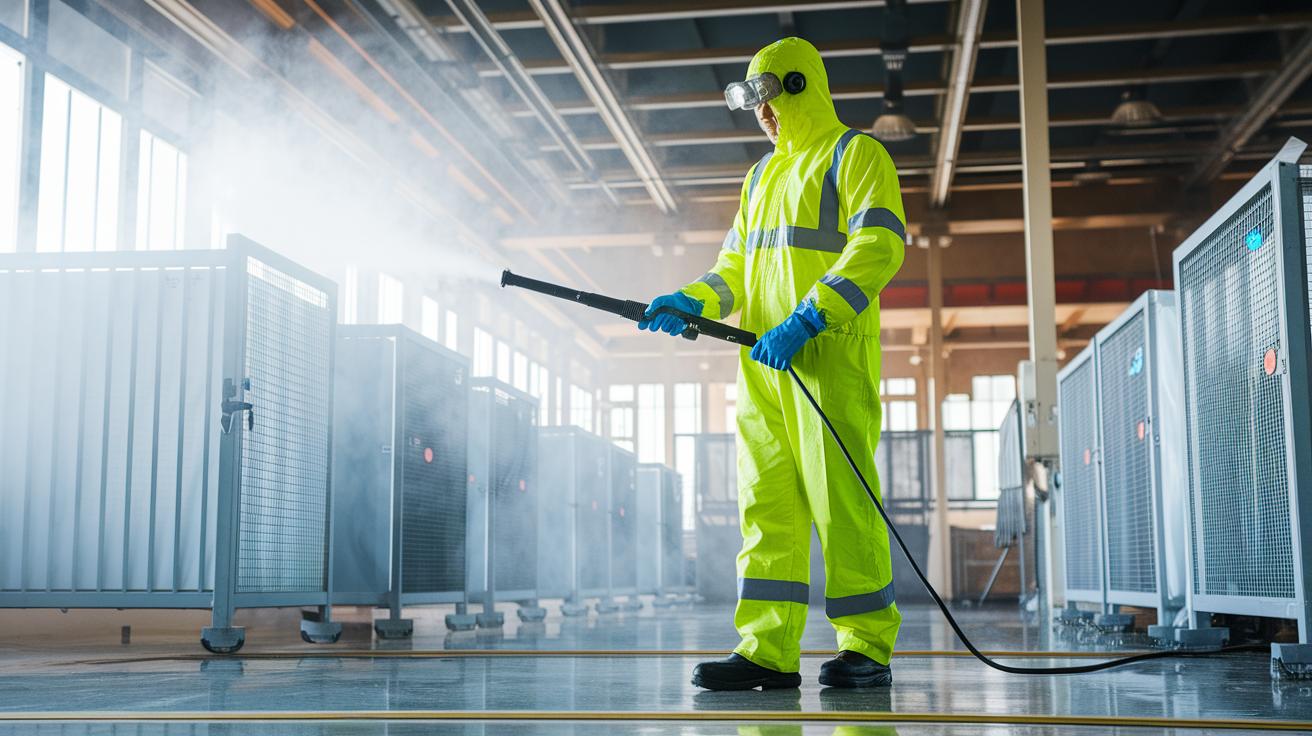
Once drying is finished, our crew uses EPA-registered cleaning and sanitizing products to remove germs and bad smells. We use wet-fogging and thermal fogging (methods that create a mist of cleaning solution) to break down smoke on walls and ceilings. One technician mentioned that thermal fogging quickly dissolved the stubborn residues, leaving surfaces looking fresh and clean.
We set up negative pressure containment (an arrangement that keeps dust and spores from spreading) to isolate the affected areas. HEPA filters (high efficiency air filters that catch very small particles) work with this setup during mold and asbestos removal, making the space safer for everyone. In one case, a team used HEPA filtration while removing asbestos to protect tenants and ensure a safer environment.
Next, we apply specialized cleaning solutions that break down and lift contaminants from surfaces. This step makes sure any chemical residues or germs are thoroughly removed. After cleaning, we add an antimicrobial coating on HVAC ducts and porous materials. This precaution helps stop mold from coming back and keeps the indoor air fresh. A contractor shared that after applying the coating, the level of mold spores on ductwork was noticeably reduced.
By combining dust isolation, careful air management, targeted cleaning solutions, and protective coatings, we keep both the building and its occupants safe. This complete approach meets high commercial restoration standards and ensures the property is ready for use.
Structural Repair Procedures and Sustainable Building Refurbishment Strategies
Commercial property repairs can range from small fixes, like replacing drywall or installing new carpeting, to major projects, such as reinforcing steel beams and restoring concrete slabs. Small repairs refresh the interior quickly and allow business to resume without long delays. Large projects strengthen the structure so operations can get back on track.
We focus on quality work that is good for both your property and the environment. We use recycled-content drywall and low-VOC paints (paints that release fewer chemicals) to lower environmental impact. For flooring, we choose options like bamboo and reclaimed wood to renew the space while supporting healthy indoor air quality.
Timely repairs are a key part of our plan. By working quickly and efficiently, we help maintain leasing schedules and keep tenant satisfaction high. A well-planned repair schedule means fewer interruptions to daily activities and a secure property value. Every step meets our quality goals and eco-friendly standards.
| Repair Type | Typical Materials | Sustainability Benefit |
|---|---|---|
| Drywall Replacement | Recycled gypsum board | Reduces landfill waste |
| Steel Beam Reinforcement | High-strength recycled steel | Lower embodied energy |
| Flooring Upgrade | Bamboo or reclaimed wood | Rapid renewability |
| Roof Membrane | Cool-roof reflective membrane | Energy-cost savings |
These methods combine solid structural repairs with sustainable building practices. This approach not only renews the building but also helps lower long-term costs and supports the environment.
Project Management and Quality Assurance for Commercial Restoration Projects

Scheduling and Milestones
We create clear schedules using simple charts to outline every step. We check key milestones to ensure each task is on track. This plan covers everything from the start of mitigation to the final finish. A set timeline helps avoid delays and keeps every team member responsible.
Quality Inspections
We follow a strict checklist during every stage. An independent review confirms that repairs meet our quality goals. With clear approval steps at major points, each detail is carefully checked. This method prevents mistakes and keeps the work at a high standard.
Client Communication
We keep you informed with regular updates and photos that show real progress. Any changes are shared right away so you always know what is happening. One point of contact ensures the process stays clear and easy to follow. Our live dashboard shows the budget, timeline, and resources, giving you a clear picture of the work.
Choosing us means you get a partner who handles everything from insurance coordination to the final finishing touches.
Case Study: Large-Scale Commercial Water Damage Restoration Best Practices
On April 02, 2025, a 250,000 sq ft facility flooded badly. Our rapid-response team reached the site within an hour. We set up strong pumps to remove the water and used moisture meters (tools that check humidity) to monitor the conditions. This quick action helped reduce damage to both the structure and the stored items.
Within two hours, we gave the client a free estimate that broke down every step from water extraction to drying, cleaning, and rebuilding. This clear cost breakdown made it easier for everyone to understand the plan and helped our team coordinate with the insurer for the claim.
Our fast equipment setup and detailed records sped up the insurance process, which minimized business downtime and shortened the restoration timeline. Specialized tools quickly removed the water and dried the building, keeping mold at bay within 24 hours.
- Fast response helped reduce damage to the building and inventory.
- Detailed documentation made getting insurance approvals smoother.
- Integrated drying steps stopped mold from forming within 24 hours.
- Clear cost reporting built client trust and ensured smooth follow-up work.
Final Words
In the action, this article breaks down key steps to stabilize property damage quickly and safely. We covered rapid response techniques, detailed damage evaluations, compliance with safety rules, advanced remediation techniques, and efficient project management. These principles help keep properties secure during emergencies and set the stage for full restoration. By applying commercial restoration best practices, you can prevent further losses and simplify insurance processes. Every step taken is designed to restore safety, reduce costs, and improve your peace of mind.
FAQ
What are the key principles of commercial restoration best practices?
The key principles of commercial restoration best practices include a rapid professional response, effective put-back that restores affected elements, adherence to quality benchmarks, and comprehensive risk evaluation to protect property and operations.
How is damage evaluated for commercial properties?
Damage evaluation for commercial properties begins with moisture mapping, drying verification with hygrometers, structural integrity inspections, fire and smoke residue assessments, and mold spore sampling to guide proper restoration.
How do restoration professionals ensure regulatory compliance and occupational safety?
Restoration professionals ensure compliance by following federal and state building-code requirements, OSHA protocols, EPA rules, and local fire-marshal directives, with regular audits and safety measures in place.
What advanced environmental remediation techniques are used at commercial sites?
Advanced remediation techniques include post-drying sanitizing with EPA-approved formulations, negative-pressure containment with HEPA filtration, and applying antimicrobial coatings to prevent mold and maintain a safe environment.
How are structural repairs and sustainable refurbishment strategies implemented?
Structural repairs and sustainable refurbishment involve both minor repairs and major rebuilds using recycled materials, low-VOC products, and green building practices to expedite recovery while protecting the environment.
Which project management practices guarantee quality assurance in restoration projects?
Project management practices for restoration include clear scheduling with milestone tracking, a single accountability point, real-time progress monitoring, and regular quality inspections to maintain consistent work standards.
How does a case study illustrate best practices in commercial water damage restoration?
The case study demonstrates best practices by highlighting a rapid 1-hour response, detailed scope documentation, efficient drying to prevent mold growth, and transparent cost reporting that streamlined the insurance claim approval process.