
Have you ever thought that your protective gear might not be protecting you as it should? When cleaning up dangerous materials, you need the right gear to keep harmful germs at bay. Not using proper equipment can expose you to serious risks. In this article, we explain the safety gear standards set by groups like OSHA (Occupational Safety and Health Administration) and the CDC (Centers for Disease Control and Prevention). We will show you which gear fits different risk levels and how each piece helps create a safe and compliant cleanup environment.
Essential PPE Gear for Biohazard Cleanup

In biohazard cleanup, using the right gear keeps you safe and meets legal rules to guard against harmful germs. OSHA (Occupational Safety and Health Administration) and the CDC (Centers for Disease Control) have set four PPE levels based on the risk of exposure.
Level A uses a positive-pressure supplied-air respirator with a full-body, chemical-resistant suit, gloves, and boots for high-risk jobs with airborne toxins. Level B also has a positive-pressure respirator but pairs it with a suit that covers less, ideal when there is a high breathing risk but less chance of skin contact. Level C relies on an air-purifying respirator (a half-mask or full-face mask) along with chemical-resistant garments and gloves for moderate risks. Level D is the simplest, using a standard work uniform and an optional N95 or surgical mask for situations with minimal exposure.
Before use, we check the respirators with a fit test to make sure they seal properly and work as they should. Along with the respirator, wearing disposable gloves, eye protection, and either full-body or partial-body suits forms a solid barrier against blood, bodily fluids, and other hazards. Our team always follows these guidelines to keep everyone safe while doing the cleanup.
| PPE Level | Respirator Type | Protective Apparel | Typical Use Case |
|---|---|---|---|
| Level A | Positive-pressure supplied-air | Full-body, chemical-resistant suit, gloves, boots | High-risk work with airborne toxins |
| Level B | Positive-pressure supplied-air | Less protective suit, gloves, boots | High respiratory risk with low skin contact |
| Level C | Air-purifying respirator (half-mask/full-face) | Chemical-resistant garments, gloves | Moderate risk with some contaminant exposure |
| Level D | N95 or surgical mask (optional) | Standard work uniform | Low-risk conditions |
Suit Material and Coverall Specifications for Biohazard Cleanup
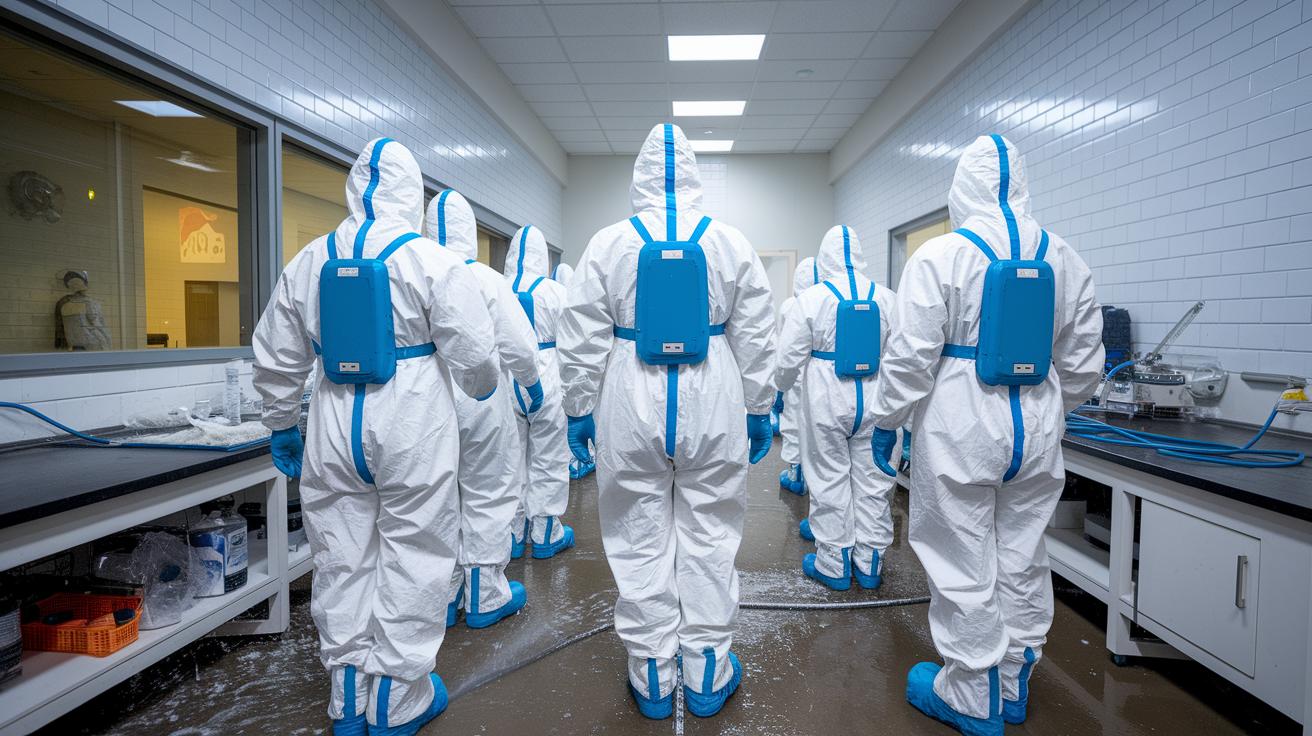
Fluid-resistant materials are a must when handling biohazard cleanup. Manufacturers choose fabrics such as Tyvek (a durable, synthetic material), polyethylene-coated polypropylene, and laminated composites to stop blood and bodily fluids from soaking through the suit. These materials push liquids away, lowering the risk of contamination and protecting your cleanup team in dangerous environments.
Disposable coveralls are made with safety features that really matter. They use seamless construction, built-in hoods, and snug, elastic cuffs to keep contaminants out. A breathable panel on the back helps keep technicians comfortable during long shifts while reducing the risk of overheating. This design meets the high standards for fluid-resistant gear and supports the need for personal barrier equipment.
Protective suit design also focuses on the right fit and strong construction to avoid tears or accidental exposure. A proper fit, taped seams, and flaps covering zippers are essential for keeping the barrier intact. Some suits even come with integrated glove and boot interfaces, and they are all single-use to prevent any chance of cross-contamination during cleanup operations.
Respiratory Protection Standards for Biohazard Cleanup

When cleaning up dangerous biohazard materials, we use special safety gear to protect our team. For very high-risk jobs, we choose positive-pressure supplied-air respirators (Levels A and B). These filters keep out harmful gases, vapors, and tiny particles. Before each use, we perform a fit test (initial test, annual retest, or quick seal check) following OSHA rules to ensure a safe, snug fit.
For jobs with moderate contamination, we use air-purifying respirators (Level C) with filter cartridges such as P100 or a combo filter for organic vapors and acid gases. We also equip our technicians with full-face shields and splash-resistant goggles. This gear acts as a strong barrier to keep any chemical or germ splashes away from the face.
In lower-risk tasks, N95 or surgical masks (Level D) might be used. However, these masks are not suitable for heavy contamination. We always conduct fit tests to ensure each mask works well and minimizes inhalation risks. By combining careful mask testing with the right gear, we keep our team safe during biohazard cleanups.
Hand and Eye Protection Essentials in Biohazard Cleanup

Use single-use nitrile or latex gloves with extra-long cuffs when cleaning biohazards. For tasks that involve higher risks, we recommend wearing two pairs of gloves for added protection. Disposable arm sleeves or gauntlets should be used to cover the space between the glove and the suit. Make sure you secure these interfaces with tape or an elastic band so that no skin is left exposed.
Wear splash-resistant goggles or a full-face shield to protect your eyes from chemicals and droplets. Replace your gloves and eye protection immediately if they are torn, heavily soiled, or after 2 to 4 hours of use. Following these steps keeps a tight barrier against contaminants during cleanup.
PPE Disposal and Decontamination Protocols in Biohazard Cleanup
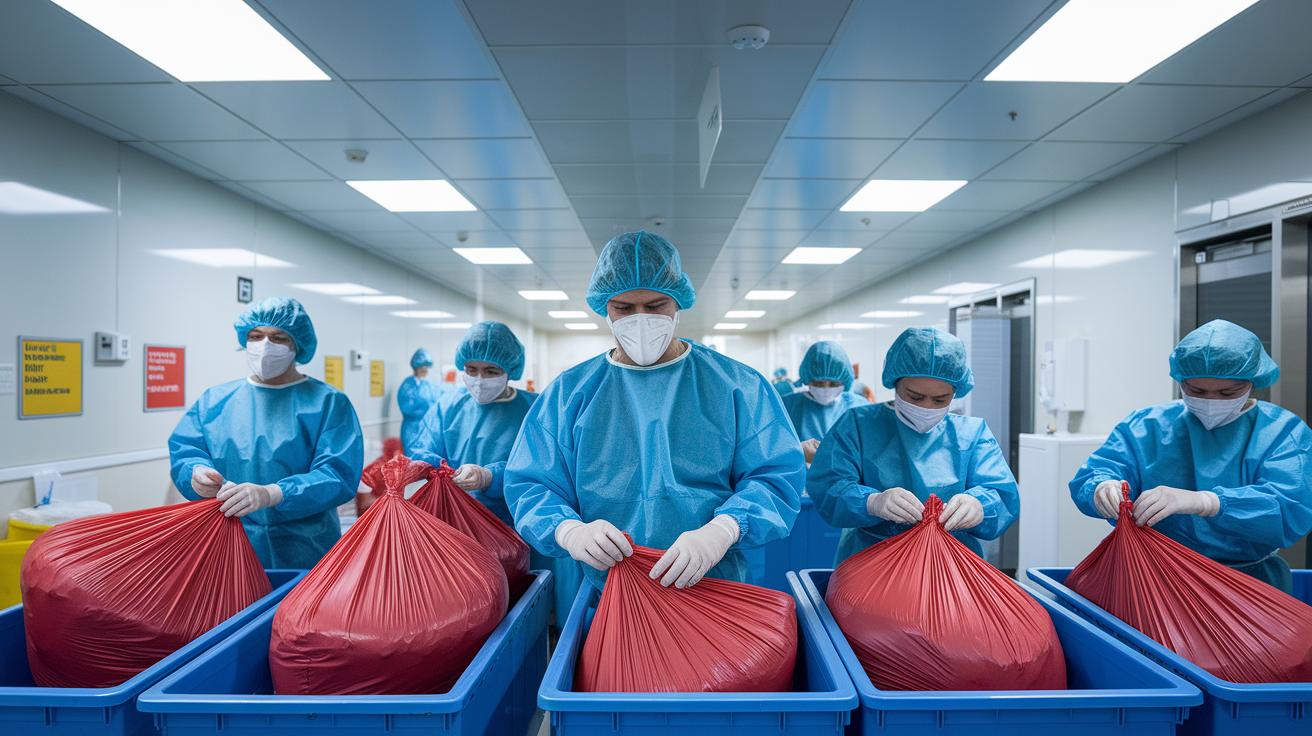
After cleanup, we handle used protective gear with strict waste rules. We put contaminated items into red biohazard bags. Each bag is sealed and clearly labeled before it goes into approved hard or sharps containers.
Before removal, we clean the equipment on-site. We spray it with an EPA-registered disinfectant or a 10% bleach solution (a strong cleaning agent) to reduce germs and odors from decay or harmful materials.
We follow a careful sequence to remove gear safely:
- Remove the outer gloves.
- Take off the suit.
- Remove the respirator.
- Take off the inner gloves.
Each step is done slowly and carefully to keep dirty surfaces from touching clean areas or skin. This method meets waste deactivation guidelines and works to protect both our team and the environment.
After on-site steps, we treat the gear again following OSHA (safety rules) and EPA (environmental rules) standards. This post-use treatment may include autoclaving (using high heat and pressure to kill germs) or incineration (burning the waste). When strong decay smells occur, we boost ventilation (increasing airflow) and upgrade respiratory protection. These measures ensure disposal is safe, meets guidelines, and minimizes any further risks.
Final Words
In the action, we've covered how essential PPE gear, from protective ensembles to respirator standards, helps keep you and your property safe during biohazard cleanup. We broke down each PPE level, suit materials, respiratory protections, hand and eye gear, and proper disposal protocols.
Remember, following biohazard cleanup ppe requirements is key to minimizing risks and ensuring a smooth, safe restoration process. Take these steps to stabilize your situation and move forward with confidence.
FAQ
Biohazard cleanup PPE requirements California
The biohazard cleanup PPE requirements in California follow OSHA and CDC guidelines. They call for respirators, gloves, coveralls, full-body suits, and eye protection, ensuring proper fit, material standards, and safe decontamination practices.
OSHA biohazard cleanup guidelines
The OSHA biohazard cleanup guidelines require effective PPE use, proper decontamination procedures, and safe disposal methods. These standards include respirator fit testing and safe doffing techniques to minimize exposure and cross-contamination.
OSHA Bloodborne Pathogen kit requirements
The OSHA Bloodborne Pathogen kit requirements mandate the inclusion of barrier protection items such as gloves, masks, gowns, and sharps containers. The kits also provide disinfectants and clear procedures for safely handling contaminated materials.
OSHA Bloodborne pathogen standard PDF
The OSHA Bloodborne Pathogen standard PDF outlines the essential regulations for exposure control plans, proper PPE use, employee training, and safe handling procedures. It serves as a detailed guide to protect workers during biohazard cleanup tasks.
Biohazard cleanup jobs
Biohazard cleanup jobs involve tasks like water extraction, decontamination, and hazardous material removal. Workers are trained in OSHA protocols, proper PPE use, and safe disposal practices to reduce risks and ensure a safe cleanup process.
Biohazard cleanup training
Biohazard cleanup training teaches proper PPE selection, decontamination methods, and safe handling and disposal of biohazardous materials. The training ensures that responders can follow OSHA guidelines and maintain a high level of safety during cleanup operations.
OSHA Bloodborne Pathogens Standard
The OSHA Bloodborne Pathogens Standard mandates the use of appropriate PPE, proper engineering controls, and thorough training. It also requires regular fit testing and decontamination protocols to protect workers from exposure to blood and bodily fluids.
Biohazard cleanup certification online
Biohazard cleanup certification online programs provide training on OSHA regulations, effective PPE use, decontamination strategies, and waste disposal. These courses equip professionals with the skills to safely manage and mitigate biohazard incidents.
What PPE is needed for biohazard cleanup, and which PPE should be worn when handling biohazards or cleaning?
The PPE needed for biohazard cleanup includes properly rated and fit-tested respirators, single-use gloves (often double-gloved), full-body suits or coveralls, and eye protection such as goggles or face shields to effectively block exposure to hazardous materials.
What are the OSHA regulations for biohazard waste?
OSHA regulations for biohazard waste require proper labeling, secure storage, and safe handling practices. Waste must be disposed of in approved containers using strict respiratory protection and decontamination protocols to prevent exposure and cross-contamination.